2026–2027
H₂ Shore Power: A Feasibility Study at Rotterdam Shortsea Terminals
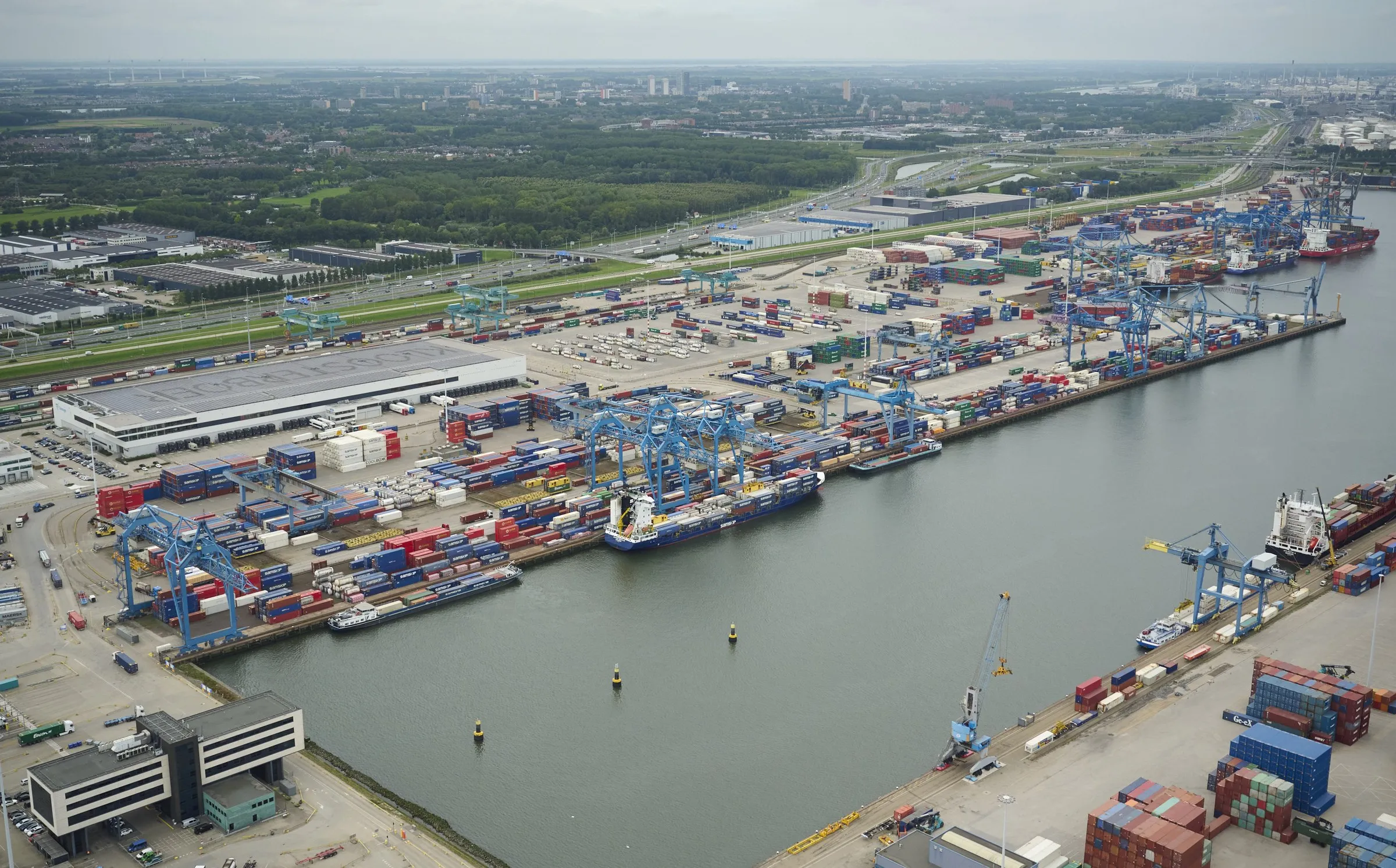
Hybrid shore power with the H₂-SPU at Rotterdam Shortsea Terminals.

Product
Hydrogen Shore Power Unit
A modular hydrogen shore power unit for container terminals, used off-grid or alongside a limited grid connection.
Status: Feasibility study
Under the EU’s AFIR regulation, ports in the TEN-T network must be able to supply shore power for at least 90% of calls by container ships above 5,000 GT from 2030. In practice, it is the terminals that have to provide it. In many ports, grid congestion makes it difficult or slow to obtain the required grid capacity. A full grid connection is also expensive. We expect the H₂-SPU to supply shore power for less than half the CAPEX of a full grid connection.
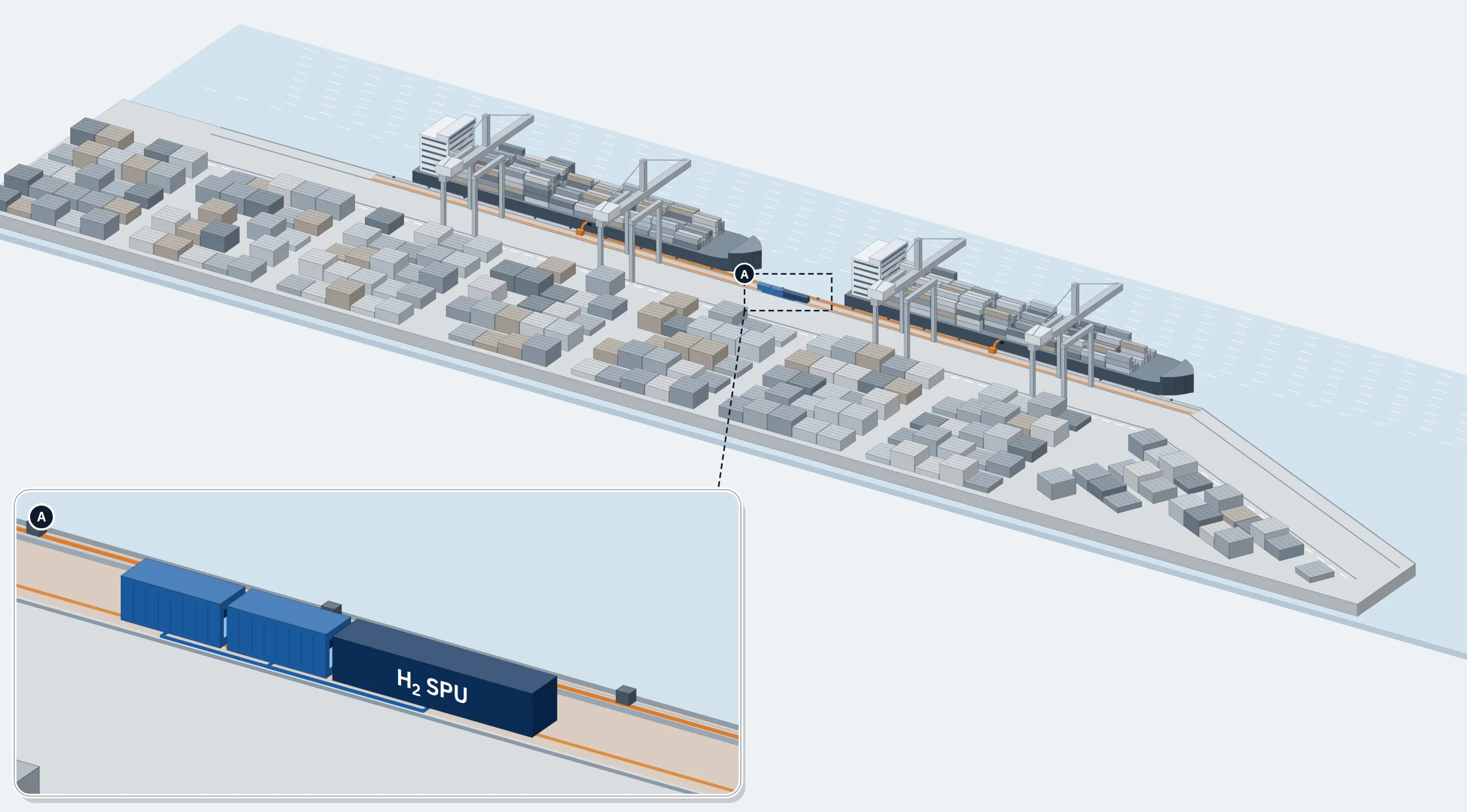
The H₂-SPU is a further development of the HAP-RM. Fuel cells, a battery and power electronics are combined in a container on the terminal.
The system is modular: capacity can be expanded by adding fuel cell and battery modules.
Together with Rotterdam Shortsea Terminals, we are carrying out a feasibility study into hybrid shore power with the H₂-SPU. The study is supported by the Smart Energy Systems subsidy scheme of the City of Rotterdam and will result in a proposal for a pilot installation.
Facing shore power requirements at your terminal? Contact us to explore what the H₂-SPU can do.
2026–2027
Hybrid shore power with the H₂-SPU at Rotterdam Shortsea Terminals.