Concept Engineering
Before a new technology can be implemented, we assess the technology, economics and operation to determine whether the business case holds.

Projects · 2026–2027
Rotterdam Shortsea Terminals
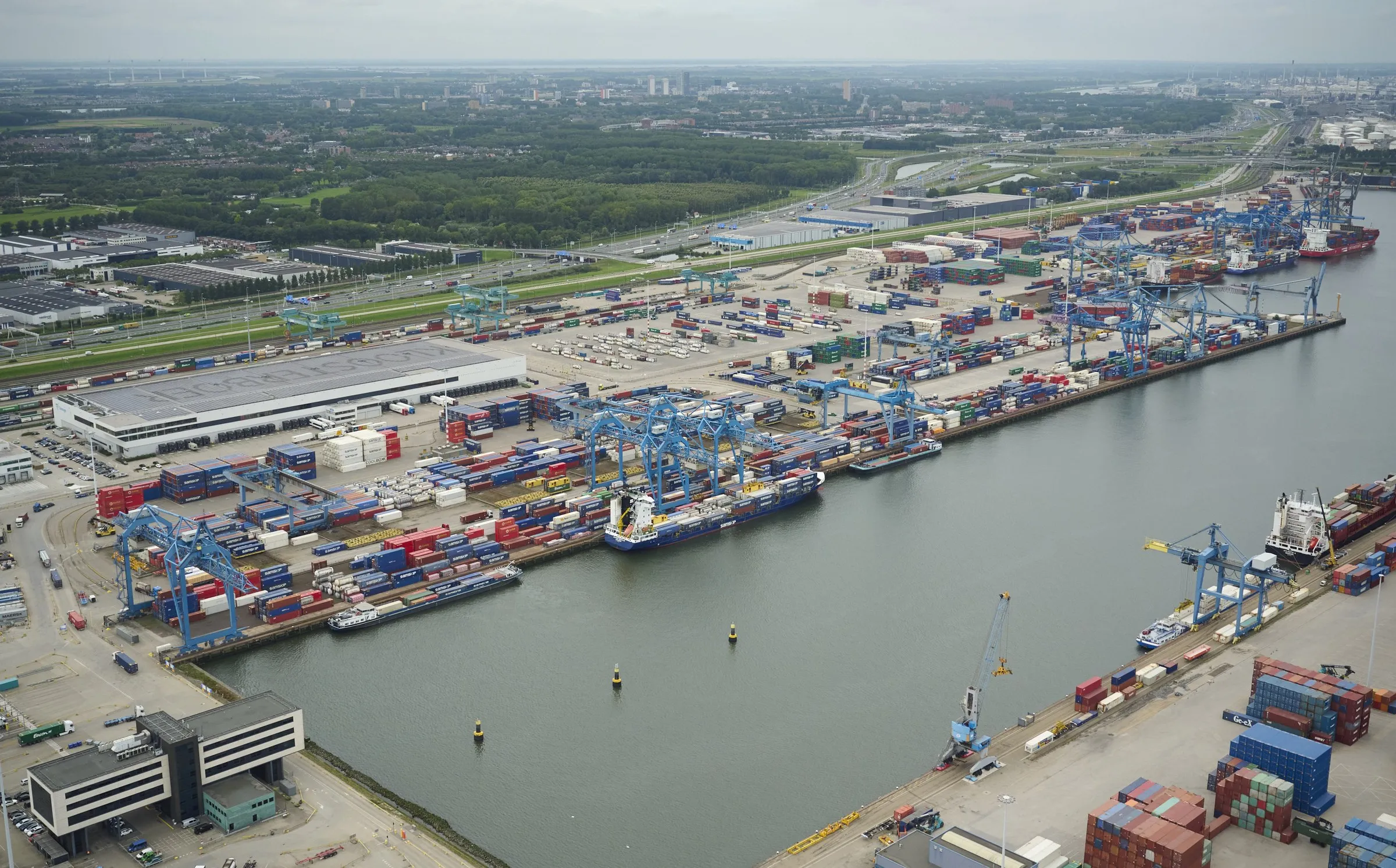
Shortsea terminals face a two-fold OPS problem: the same infrastructure requirements as the rest of maritime shipping, but against far lower power demand — and a grid that often cannot support new connections anyway. Together with Rotterdam Shortsea Terminals, Mana Engineering is investigating whether a containerised H₂ fuel cell system can address both at once, building the operational understanding and business case needed for a pilot at Europe’s largest shortsea terminal.
Exploring hydrogen as a hybrid shore power solution under grid congestion
Onshore Power Supply (OPS) — providing electricity to vessels while at berth — is one of the most direct ways to reduce emissions from ships in port.
The obstacle is not technology. It is grid capacity.
In the Netherlands, grid congestion is already a binding constraint on OPS expansion, and upgrades are years away.
For shortsea terminals, the challenge is two-fold. OPS regulations were developed for the maritime sector as a whole, meaning the same infrastructure requirements apply regardless of vessel size.
Shortsea vessels sit at the low end of the power demand range compared to ocean-going ships. The result is a disproportionate CAPEX burden relative to the energy a terminal can realistically sell — making a viable business case difficult to build even before the grid is taken into account. And the grid only compounds the problem: even where investment is justified, the capacity for a new OPS connection often does not exist. It is a challenge that has been underrepresented in policy.
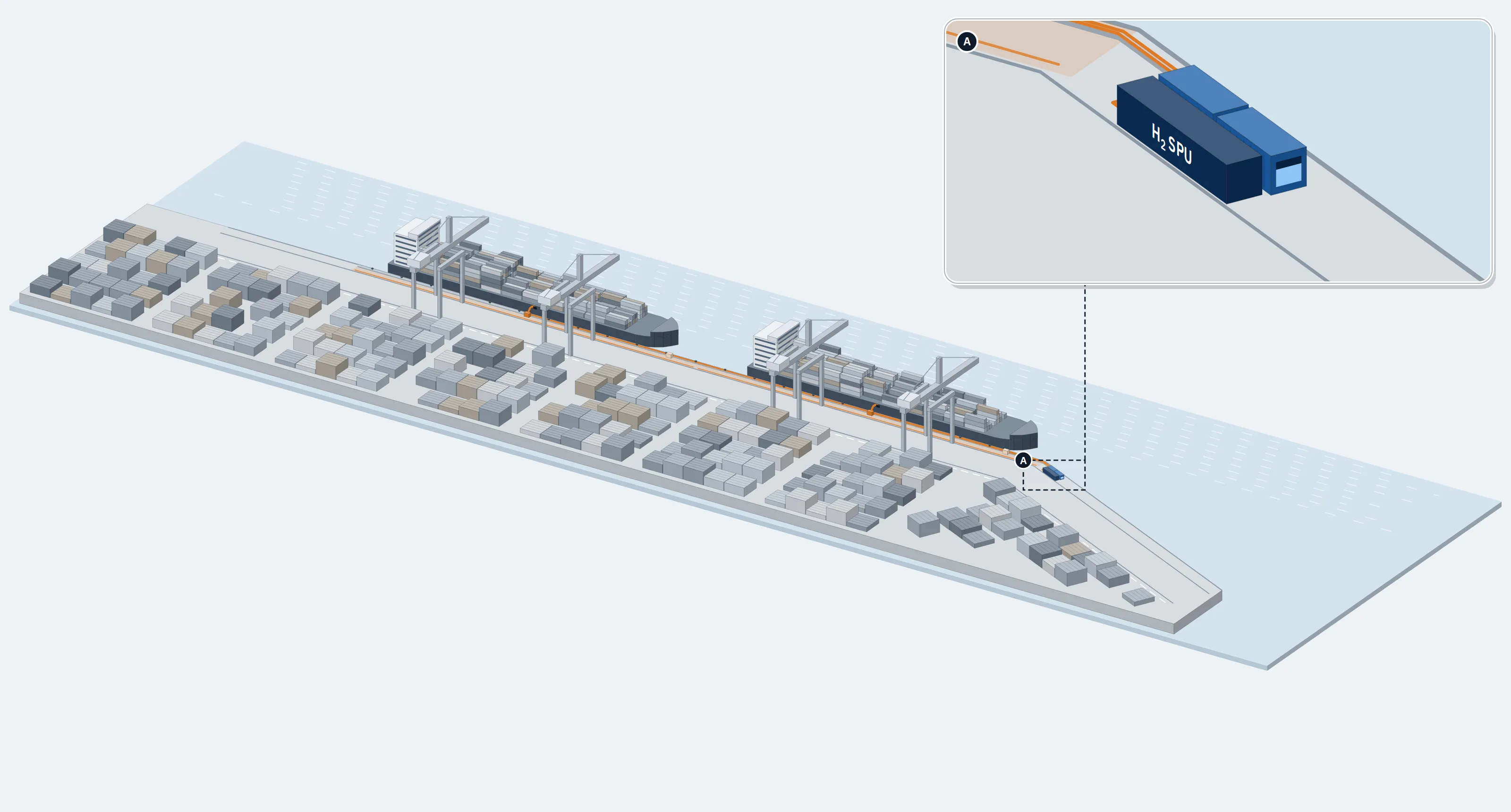
In June 2026, we started this project with Rotterdam Shortsea Terminals (RST), the largest shortsea terminal in Europe, to investigate whether hydrogen can address both problems at once. The study is supported by the Smart Energy Systems (SES) subsidy programme of the Municipality of Rotterdam. The study asks a specific question: can a containerised hydrogen fuel cell system serve as a hybrid shore power solution at a major terminal, providing competitive OPS without depending on grid expansion — and with a business case that actually works for shortsea operations?
RST must offer shore power from 2030, but there were no measurements of how much power vessels draw at the quay. We combined a full year of call data with AIS data and a power model, validated with onboard measurements from vessels calling at the terminal. The resulting dashboard shows energy demand, peak power and occupancy per quay and per vessel.
We analysed a full year of calls to map the annual energy demand across the terminal’s three quays.
The results formed the basis for sizing four hybrid shore power configurations for the terminal. Read more about our data analysis and decision support.
Mana Engineering brings its own integrated, containerised H₂ fuel cell design, the H₂-SPU, to this project — developed in-house and designed from the outset to be adaptable for applications like this. The study will assess both the operational fit and the business case, because a technically sound solution only matters if the economics work.
On 20 June 2026, we made our first visit to the RST terminal to begin building that operational understanding from the ground up.
Our goal is to work toward a pilot installation — proof of our concept at a leading terminal, demonstrating that grid-independent shore power is both technically feasible and commercially viable.
This project is made possible by the Smart Energy Systems (SES) subsidy programme from the Municipality of Rotterdam, and we are grateful for their support in enabling us to move this work forward.
We will share updates as the project develops. If you are interested in what we are building, want to follow our progress, or have relevant expertise or ideas to contribute, we would be glad to hear from you.
Before a new technology can be implemented, we assess the technology, economics and operation to determine whether the business case holds.
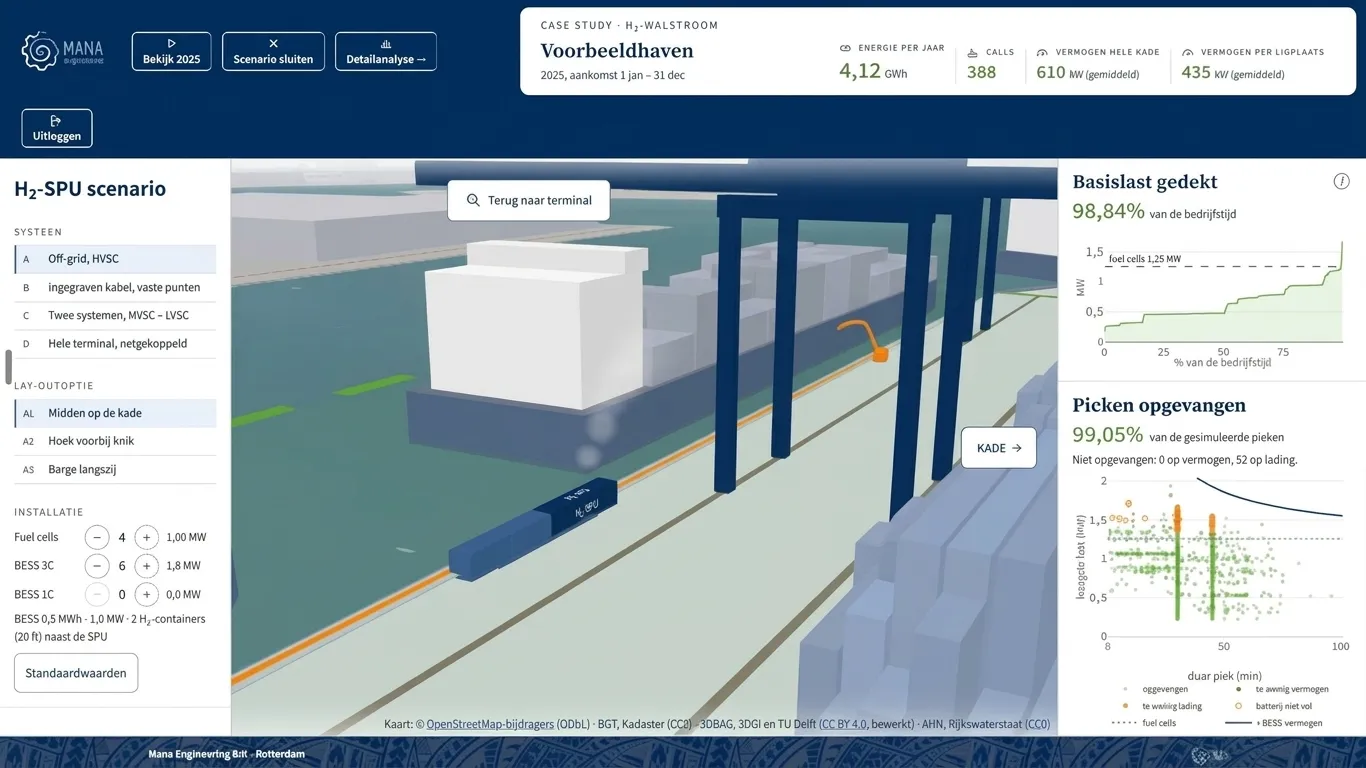
We turn your operational data into clear answers, so you can make investment decisions in the energy transition based on facts rather than estimates.
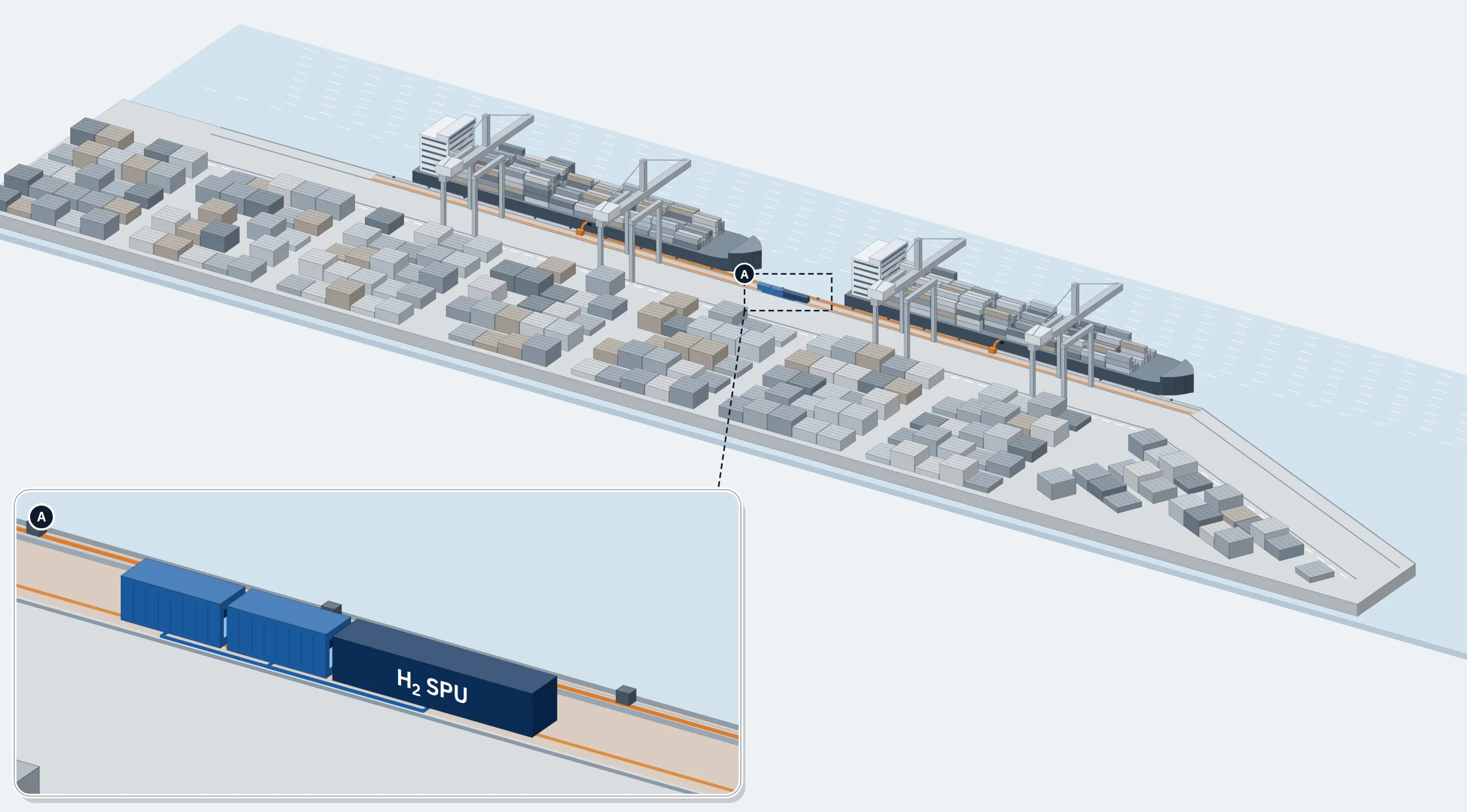
A modular hydrogen shore power unit for container terminals, used off-grid or alongside a limited grid connection.