Service

Concept Engineering

Before a new technology can be implemented, we assess the technology, economics and operation to determine whether the business case holds.
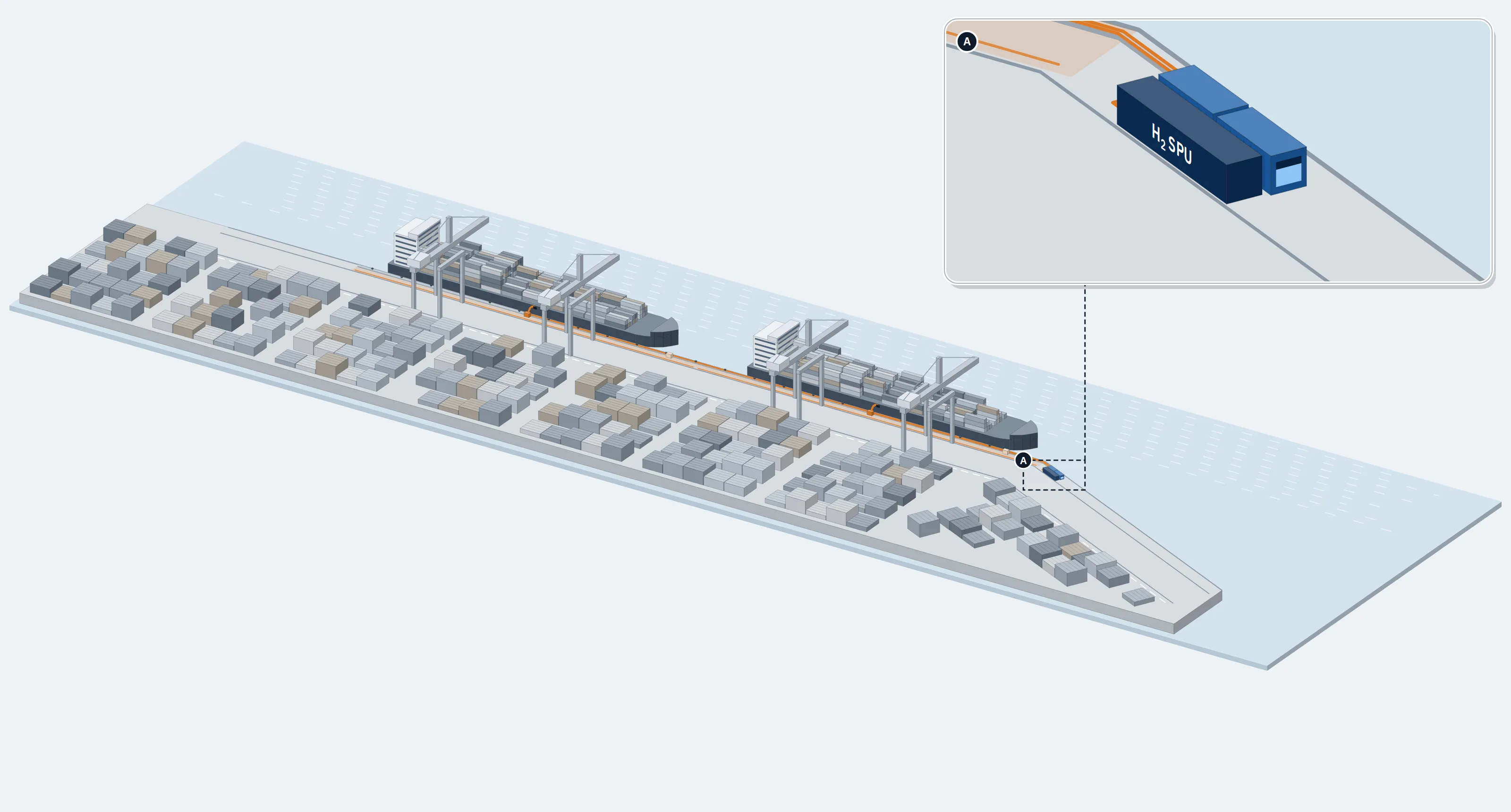
Isometric concept drawing of a container terminal with two vessels at the quay, a shore power cable along the quay and an H₂-SPU with hydrogen containers at the end of the quay

The challenge

New technologies raise practical questions before they can be implemented. Does the technology fit the operation? What does it cost compared with the alternatives? Which safety requirements and permits apply, and who is responsible for what?

These questions rarely stand on their own. Regulation sets deadlines, while infrastructure, such as available grid capacity, and investment costs limit the options. That is why they need to be answered together.
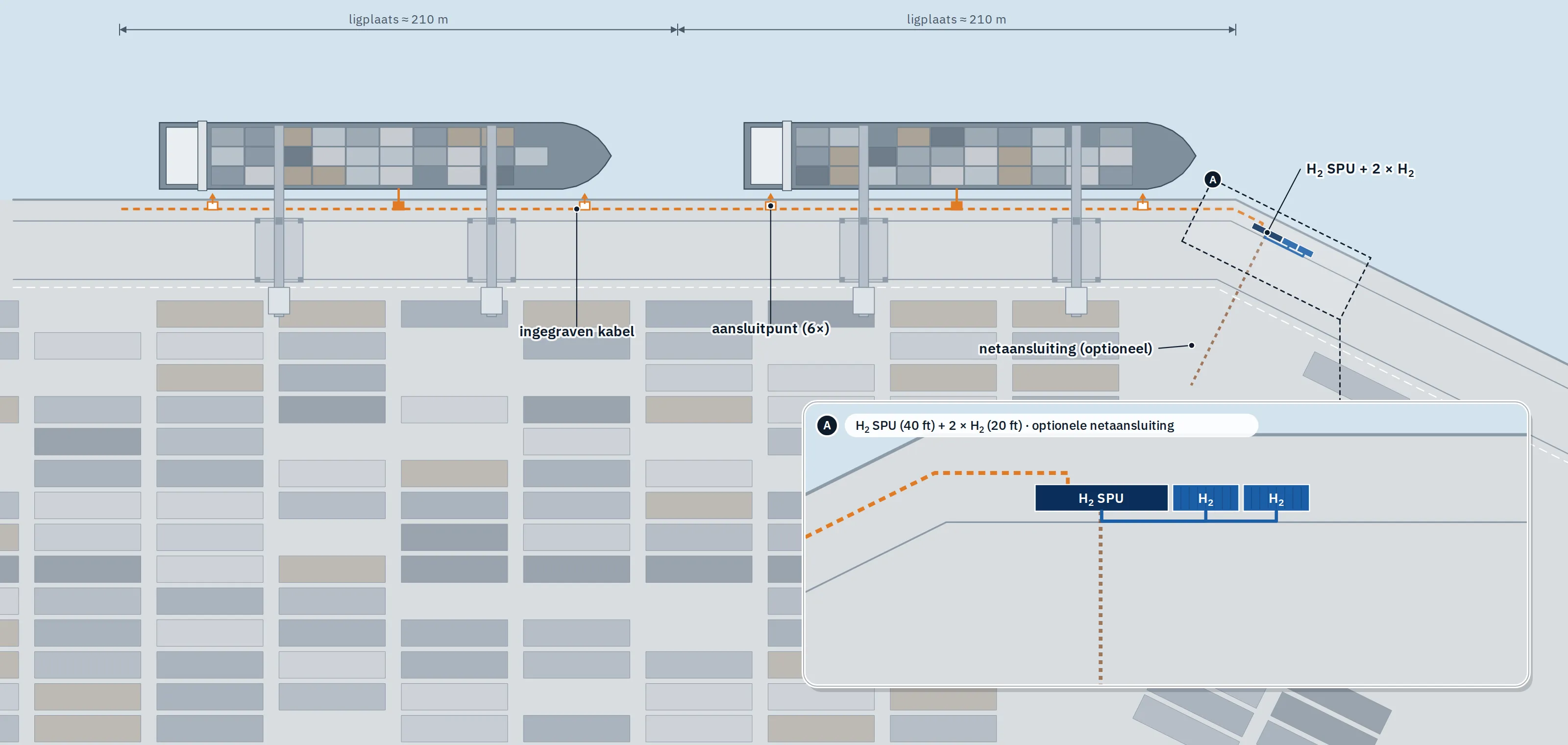
Top view of a concept layout for hydrogen shore power: two berths of about 210 m, a buried cable with six connection points along the quay, and an H₂-SPU with two hydrogen containers and an optional grid connection at the corner of the quay
Example of a concept layout: an H₂-SPU (40 ft) with two hydrogen containers (20 ft) at the corner of the quay supplies six connection points along two berths through a buried cable, with an optional grid connection.

Our approach

Each study is set up around the client’s question. The scope ranges from a short feasibility check to a study that runs up to an investment decision. A study usually covers three aspects:

  • Technology: the technical feasibility in the specific situation, the main design choices and their consequences.
  • Economics: costs and benefits compared with the alternatives, taking into account regulation, energy prices and available funding.
  • Implementation: safety, permits, logistics and the division of responsibilities in daily operation.

Scope and planning are agreed in advance. Larger studies include intermediate results, so the direction can be adjusted along the way. Where relevant, we also identify suitable funding schemes and prepare the application.

What you get

Depending on your question, a study can include:

  • Concept selection: an overview of the possible solutions, compared on technology, costs and risks, with a recommendation on what to work out.
  • Concept designs: system configurations, site layouts, single line diagrams, P&IDs, equipment lists and 3D renders.
  • A business case: CAPEX and OPEX, comparison with the alternatives, and sensitivity to energy and hydrogen prices.
  • Safety and permitting: HAZID and HAZOP sessions, and preparation of permit and certification applications together with the authorities.
  • An implementation plan: logistics, the division of responsibilities between parties, planning and the next investment steps.
  • Data analysis where needed: when the starting point is unclear, we first map the actual demand with a data analysis.

Have a question about your own project? Contact us, we’re happy to help you explore the options.

Related projects

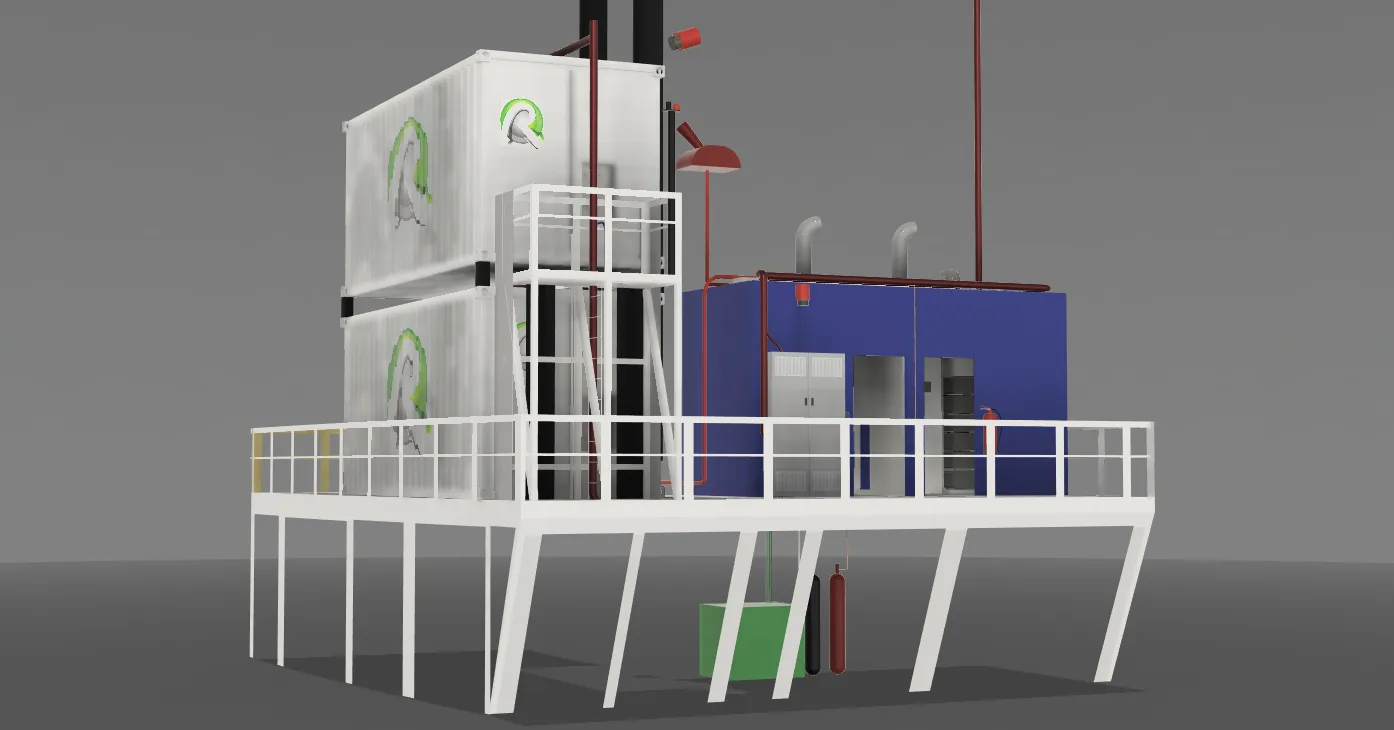
3D render of the HAP-RM hydrogen module on a deck platform

2025–2026

DTB | H₂ Auxiliary Power Retrofit

In 2025 Mana Engineering conducted a feasibility study into retrofitting existing shortsea vessels with a hydrogen fuel cell system powering their hotel load, helping owners meet FuelEU Maritime targets without touching main propulsion.

Contact person

Huub BergsteinCommercial Director